
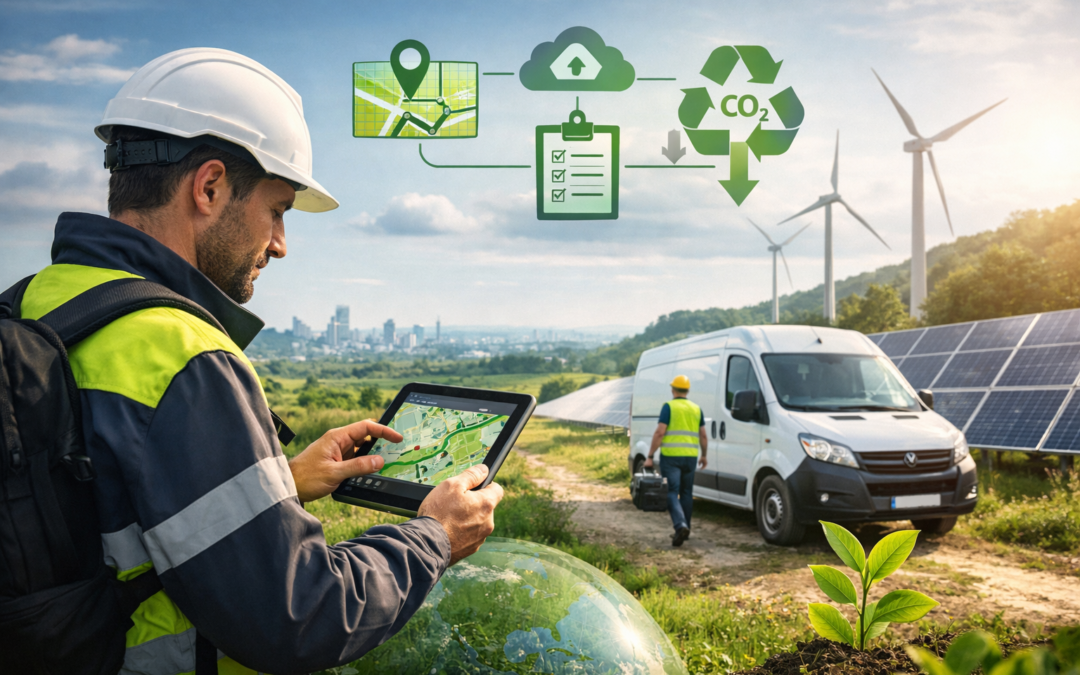
How Digitalization and FSM Software Help Reduce Emissions and Optimize Resources
More and more organizations are looking to reduce their environmental impact without sacrificing operational efficiency. In this context, the digitalization of field services has become a key tool for achieving more sustainable operations.
Advanced solutions such as Kairos365FSM, developed by Netboss Comunicaciones, make it possible to manage technical teams, assets, and field processes more intelligently, reducing unnecessary travel, fuel consumption, and paper usage.
Sustainability is no longer just a matter of social responsibility: it is also an efficiency strategy.
Route Optimization: Fewer Kilometers, Lower Emissions
One of the main sources of environmental impact in technical services is transportation. Inefficient planning generates unnecessary journeys, higher fuel consumption, and increased emissions.
Thanks to advanced planning systems and intelligent algorithms, FSM software optimizes technician assignment based on location, availability, and service priorities.
The result:
- Reduced kilometers traveled.
- Lower fuel consumption.
- Lower CO₂ emissions.
- Increased daily productivity.
Less time on the road means greater efficiency and a smaller environmental footprint.
Paperless Environments: Full Process Digitalization
Digital transformation also eliminates the dependence on paper for work orders, forms, and reports.
With digital tools:
- Work orders are managed from mobile devices.
- Signatures are collected electronically.
- Documentation is stored in the cloud.
- Reports are generated automatically.
In addition to reducing waste, this digitalization minimizes manual errors and speeds up administrative processes.
First-Time Repairs: Key to Reducing Travel
Every additional technical visit means another journey and greater environmental impact. Improving the first-time resolution rate is one of the most effective ways to reduce emissions.
An FSM system supports this through:
- Access to complete service histories.
- Diagnostics based on previous data.
- Real-time communication between technicians and experts.
- Advance preparation of materials and spare parts.
Fewer second visits mean less fuel consumed and a direct improvement in service quality.
Preventive Maintenance and Extending Equipment Lifespan
Sustainability also means extending the useful life of assets. Planned maintenance reduces major breakdowns, prevents premature replacements, and decreases electronic waste.
With proper maintenance management:
- Periodic inspections are scheduled automatically.
- Incidents are detected before they escalate.
- Resources are optimized according to actual usage.
- Decisions are made based on data.
This not only reduces costs, but also lowers the environmental impact associated with manufacturing and replacing equipment.
Process Optimization to Consume Fewer Resources
The standardization and automation of workflows make it possible to identify hidden inefficiencies. When processes are well designed:
- Errors are reduced.
- Unnecessary repetitions are minimized.
- The use of parts and materials is optimized.
- Operational traceability is improved.
Operational efficiency and sustainability are not opposing goals: they reinforce each other.
Technology Serving a More Responsible Operating Model
Modern field service management shows that it is possible to combine profitability, efficiency, and environmental commitment.
Digitalization, intelligent planning, and optimized maintenance make it possible to reduce emissions, save resources, and deliver higher-quality service.
Sustainability is not a trend: it is the natural evolution of intelligent operations.